Stay up to date with the latest news
Subscribe to our telegram channel

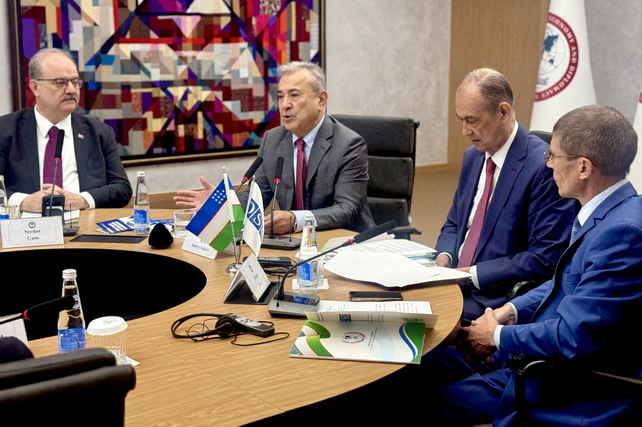
OSCE and international partners discuss the future development of Central Asia at a conference in Tashkent
Tashkent, Uzbekistan (UzDaily.com) — An international conference titled “Central Asia: A New Paradigm for Regional Development” was held in Tashkent, organized by the Diplomatic Academy at the University of World Economy and Diplomacy (UWED) in partnership with the OSCE Project Co-ordinator in Uzbekistan.
The conference brought together representatives of diplomatic academies from Central Asian countries and Azerbaijan, diplomatic missions, the United Nations Regional Centre for Preventive Diplomacy for Central Asia (UNRCCA) in Ashgabat, as well as experts from international and academic institutions, including the Finnish Institute of International Affairs (FIIA).
Participants highlighted the growing political trust and good-neighbourly relations in Central Asia, as well as the increasing role of regional co-operation in advancing economic, transport, energy and humanitarian ties.
The conference also underscored the importance of sustaining regional dialogue and expanding expert and academic exchanges. In this context, the Central Asian Expert Forum (Tashkent, 2025) and the Fergana Peace Forum were noted as important platforms for strengthening trust and promoting practical co-operation across the region.
Discussions focused on regional security, climate and water-related challenges, transport connectivity and economic co-operation. Participants agreed that transboundary challenges require co-ordinated and long-term regional responses.
The conference concluded with a shared emphasis on the importance of further strengthening engagement among academic, expert and diplomatic communities, as well as continuing regional dialogue in the interests of stability, trust and sustainable development.
The event served as further evidence of a new paradigm of regional development - a shift from active regional engagement toward deeper intellectual and institutional integration.