Stay up to date with the latest news
Subscribe to our telegram channel

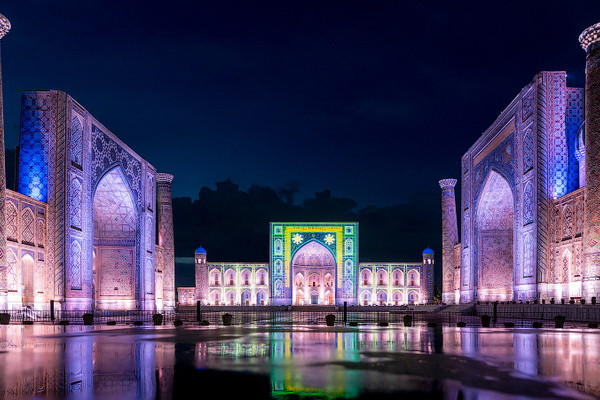
Uzbekistan Publishes Samarkand Master Plan to 2045
Tashkent, Uzbekistan (UzDaily.com) — A draft resolution of the Cabinet of Ministers of Uzbekistan providing for the approval of the Samarkand master plan through 2045 has been published on the public discussion portal for draft regulatory legal acts.
The document was developed by the Khokimiyat of Samarkand region in line with instructions from President Shavkat Mirziyoyev and is aimed at the long-term development of one of the country’s largest cities.
According to the explanatory note, in November 2024 the head of state instructed the preparation of a master plan for the regional center and its submission for government approval. The draft covers comprehensive territorial planning, including infrastructure development, construction regulation, and a strategy for socio-economic growth.
The master plan defines the main objectives of urban policy, including streamlining construction permits, developing engineering and transport infrastructure, regulating population density, and protecting green areas and cultural heritage sites. It is also designed to meet the current and future needs of city residents.
Under the project, Samarkand’s area is defined at 11,272 hectares with expansion potential up to 28,415 hectares. The city’s population is projected at 560,000 people, with growth expected to reach 1.2 million.
Territorial development is planned according to zoning principles similar to those used in Tashkent. The plan distinguishes conservation zones, where new construction is prohibited and historical and natural heritage is preserved; reconstruction zones; and redevelopment zones. The latter include vacant land, industrial sites, and low-rise residential areas where outdated buildings may be demolished and replaced with new complexes under integrated development plans.
In reconstruction zones, construction of high-rise buildings is permitted to densify urban development, subject to infrastructure capacity and public consultation. These areas include districts with recently completed development or already established residential environments.
The functional structure of the city includes six main types of land use: residential, public, industrial, historical, recreational, and transport zones.
Special attention is given to the development of green spaces. Samarkand currently has 9,461 hectares of green areas, including restricted-access territories, public parks, and protected natural zones.
The plan provides for the creation of an additional 11,000 hectares of green areas and the establishment of an 18,000-hectare green belt around the city. As a result, green space per capita is expected to double to 10 square meters per resident.
Transport infrastructure is also a key priority. The city already has 527 kilometers of roads.
The master plan envisions the construction of 837 kilometers of new roads, expansion of an additional 160 kilometers of existing highways, and the development of new tram lines along 27 routes, which is expected to significantly transform the city’s long-term transport system.