Stay up to date with the latest news
Subscribe to our telegram channel

Uzbekistan Attracts US$35 Billion Into Energy Sector
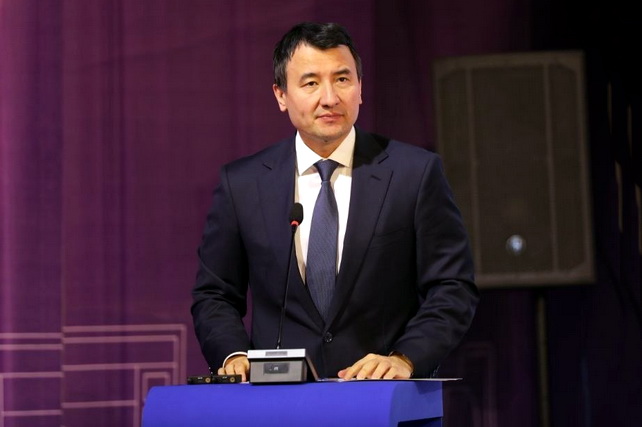
Tashkent, Uzbekistan (UzDaily.com) — Uzbekistan’s energy sector has become one of the key drivers of the country’s economic transformation, with around US$35 billion in direct investments attracted in recent years, Deputy Prime Minister Jamshid Khodjaev said on May 12 at the opening of Uzbekistan Energy Week 2026 in Tashkent.
According to Khodjaev, Uzbekistan has added 9 GW of new generation capacity during this period, while electricity production has increased by nearly 40%, rising from 60 billion kWh to 85 billion kWh.
The country’s total installed generation capacity has reached almost 26 GW.
He said the energy sector now plays a strategic role in supporting economic competitiveness, infrastructure development, and regional connectivity.
“For many years, energy in Uzbekistan was perceived mainly as a constraint. Today our ambitions are different. We want energy to become one of Uzbekistan’s strongest advantages — for households, regional cooperation and, of course, the green transition,” Khodjaev said.
A major priority for the government is the expansion of renewable energy. Khodjaev said solar and wind capacity has already exceeded 5.5 GW. Together with hydropower, clean energy now accounts for around 30% of the country’s total energy mix.
“This is a major shift. We are no longer just thinking about the energy transition — we are building it,” he said.
He stressed that the transformation goes beyond building new power plants, emphasizing the need for a reliable and flexible energy system capable of integrating renewables without compromising supply stability.
According to Khodjaev, more than 69,000 km of power lines and 14,000 substations have been modernized, forming the backbone of the national grid and enabling new industrial and energy projects.
The government is also prioritizing localization of production and industrial development. Khodjaev said the volume of domestic goods, services, and supplies for the energy sector has already exceeded US$700 million and could grow to more than US$1.3 billion.
“Our goal is not just to import technologies. Our goal is to develop local engineering, local production, local services, local specialists and long-term industrial cooperation,” he said.
He noted that nearly all major new generation projects are being implemented through public-private partnerships. International partners include Acwa, Masdar, American Power, EDF, and China Energy Engineering Corporation.
Khodjaev also said Uzbekistan’s energy transformation is gaining regional importance, as the country strengthens its position as a Central Asian energy hub and expands cooperation with neighboring states.
He highlighted collaboration with Azerbaijan and Kazakhstan on a “green corridor” project aimed at exporting electricity to Europe.
At the same time, demand for electricity is expected to rise further due to industrialization, economic digitalization, and improving living standards.
“Renewable energy requires stronger grids, storage solutions, balancing capacity and modern dispatch systems. Energy efficiency must become a national habit,” he said.
He added that the next phase of reforms will focus on efficiency, technological depth, local value creation, and regional integration.
Uzbekistan’s energy development strategy through 2035 includes the creation of a wholesale electricity market, introduction of RAB tariffs, and partial privatization of power grids. By that time, electricity consumption is expected to reach 123 billion kWh, while generation capacity is projected to increase by another 34 GW.