Stay up to date with the latest news
Subscribe to our telegram channel

Uzbekistan, IFRS, sustainability standards, ISSB, ESG reporting, financial transparency, international standards, economic reform, investment climate, climate disclosure
Tashkent, Uzbekistan (UzDaily.com) — On 21 April, Uzbekistan took another step toward introducing international sustainability standards into its financial reporting system. The Ministry of Economy and Finance signed a bilateral agreement with the International Financial Reporting Standards (IFRS) Foundation.
The document provides for the implementation, publication, and translation of the IFRS Sustainability Disclosure Standards, establishing a legal and institutional framework for their application in Uzbekistan.
These standards, developed by the International Sustainability Standards Board (ISSB), are becoming part of the global financial reporting architecture. Their adoption is seen as an important step toward integrating Uzbekistan into international financial systems.
The initiative is being implemented in accordance with Presidential Decree No. PP-282 dated 15 September 2025.
Under the decree, the application of IFRS sustainability standards will become mandatory for public interest entities starting from 1 January 2027. The newly signed agreement is intended to accelerate preparations for this transition and ensure its systematic implementation.
The sustainability disclosure standards require companies to report not only financial performance but also environmental, social, and governance (ESG) indicators. This approach is aimed at providing investors, creditors, and market participants with a more comprehensive information base.
In the context of global challenges, including climate change, resource efficiency, and corporate social responsibility, the relevance of such standards continues to grow.
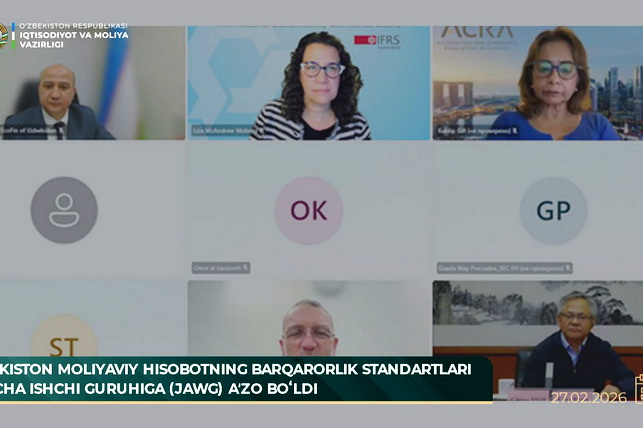
Uzbekistan has also joined the group of countries participating in the Jurisdictional Working Group (JWG) on sustainability standards, confirming its involvement in shaping international practices in this area.
The agreement is viewed not only as a technical step, but also as part of a broader policy to increase economic transparency, strengthen investment attractiveness, and improve the country’s position in global rankings.