Stay up to date with the latest news
Subscribe to our telegram channel

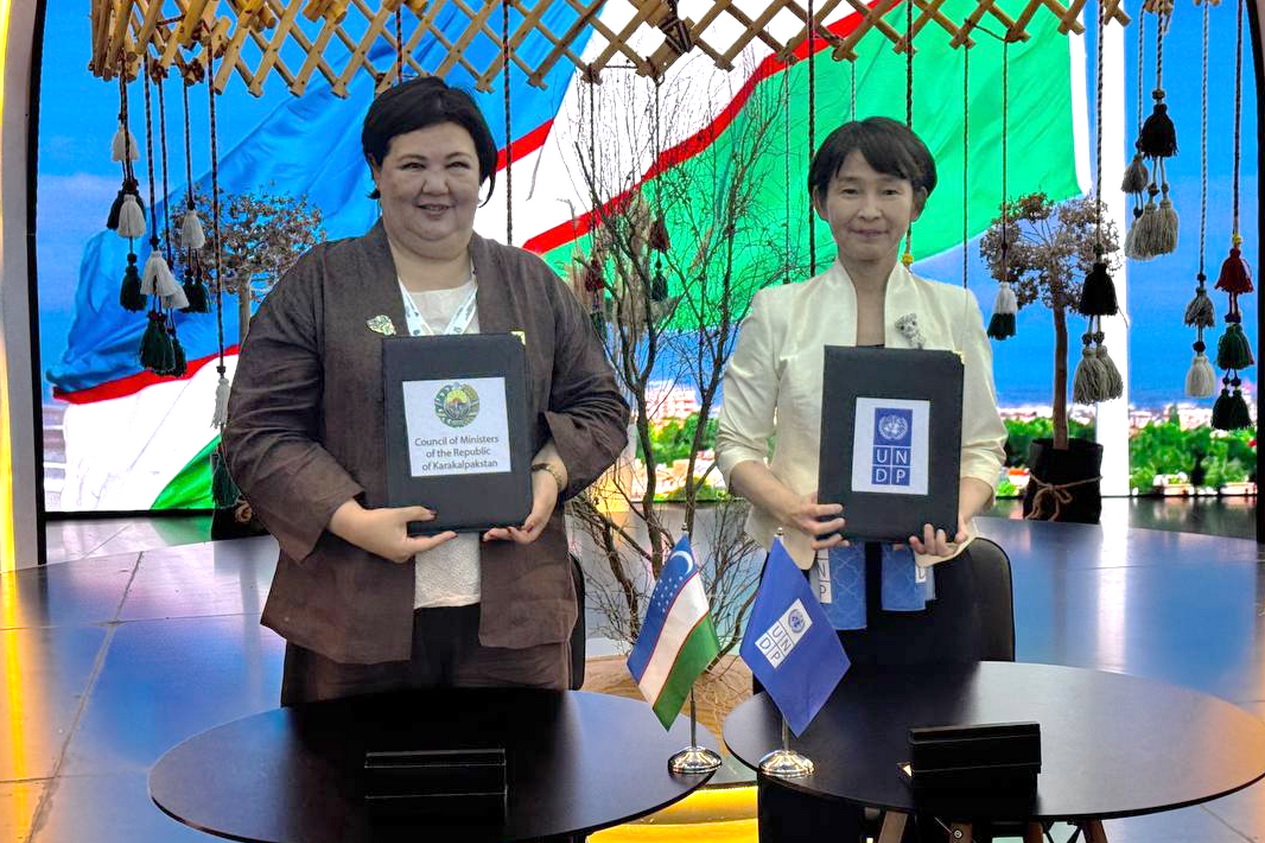
UNDP, Karakalpakstan Strengthen Aral Region Cooperation
Tashkent, Uzbekistan (UzDaily.com) — At the Eco Expo 2026 international environmental exhibition in Samarkand, the United Nations Development Programme (UNDP) and the Committee on Ecology of the Republic of Karakalpakstan signed a Statement of Intent aimed at strengthening cooperation in environmental protection and the sustainable development of the Aral Sea region.
The document was signed by Akiko Fujii, UNDP Resident Representative in Uzbekistan, and Leyla Seitova, Chairperson of the Committee on Ecology of the Republic of Karakalpakstan.
The signing marks another step toward consolidating efforts to address the environmental challenges facing the region, which has remained one of the world’s most vulnerable areas for decades as a result of the Aral Sea crisis.
The new agreement provides for expanded cooperation in biodiversity conservation, restoration of degraded ecosystems, sustainable management of land and water resources, and strengthening the resilience of local communities to the impacts of climate change.
Particular attention will be given to the conservation of lake and wetland ecosystems in the Lower Amu Darya basin, the development of protected natural areas, the sustainable use of pasture and forest resources, environmental education, and scientific research.
According to Akiko Fujii, UNDP Resident Representative in Uzbekistan, the document establishes a foundation for closer cooperation in preserving the natural heritage of the Aral Sea region and complements the previously developed Integrated Water Resources Management Plan Concept for the Lower Amu Darya basin.
She noted that an integrated approach to natural resource management would help simultaneously address ecosystem restoration and improve the quality of life of local communities.
Leyla Seitova, Chairperson of the Committee on Ecology of the Republic of Karakalpakstan, emphasized that environmental protection issues in the region carry not only ecological but also socio-economic significance. She stated that expanded cooperation with UNDP would create additional opportunities for implementing environmental initiatives, restoring wetlands, and adapting to climate change.
The practical implementation of the planned areas of cooperation will be carried out, among other mechanisms, through the Aral Sea Wetlands project, which is being implemented by Uzbekistan’s National Committee on Ecology and Climate Change jointly with UNDP and financed by the Global Environment Facility (GEF).
The project focuses on conserving lake and wetland ecosystems in the Aral Sea basin, strengthening the resilience of natural landscapes, and supporting local communities whose livelihoods are directly linked to environmental conditions.
The signing of the statement reflects the commitment of international and national partners to developing a long-term model for the sustainable development of the Aral Sea region based on environmental responsibility, sustainable natural resource management, and international cooperation.