Stay up to date with the latest news
Subscribe to our telegram channel

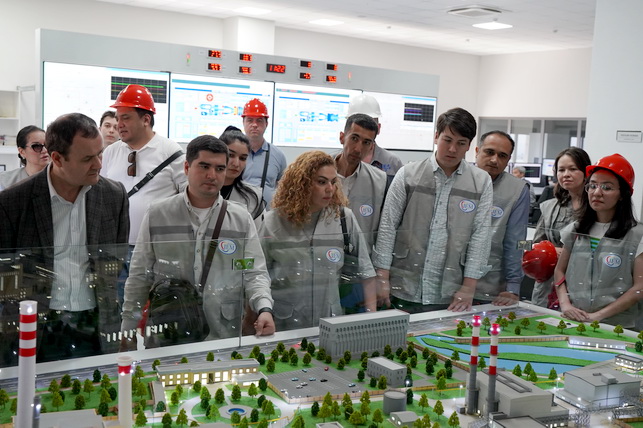
Tashkent CHP Plant Hosts ESG Visit on Decarbonization
Tashkent, Uzbekistan (UzDaily.com) — An exploratory visit focused on environmental, social, and governance (ESG) practices was held at the Tashkent Combined Heat and Power Plant operated by JSC Thermal Power Plants as part of Uzbekistan’s sustainable development policy in the energy sector.
The event took place on May 5, 2026, within an ESG training program implemented by UzAssets in cooperation with the Asian Development Bank, with participation from international experts from PwC.
More than 30 specialists and managers responsible for ESG and environmental areas from 17 major state organizations across the country took part in the visit.
The main objective of the event was to introduce practical mechanisms for the inventory of Scope 1 greenhouse gas emissions, including data collection processes, measurement procedures, and the maintenance of primary environmental documentation.
The practical part of the program was conducted at modern gas turbine units of Japanese origin, commissioned in 2024. The equipment meets international standards for energy efficiency and environmental safety.
The modernization and commissioning project for the gas turbine units was implemented with support from the Japan International Cooperation Agency (JICA), marking an important stage in upgrading the plant’s generation capacity and improving its environmental performance.
Participants were presented with the production infrastructure of the Tashkent CHP plant, including stationary emission sources and monitoring systems. Special attention was paid to environmental monitoring, ESG reporting, and the introduction of modern approaches to environmental impact management.
It is noted that the management of Thermal Power Plants is consistently integrating ESG principles into its development strategy, viewing sustainability, environmental responsibility, and transparency as key priorities in the sector’s transformation.
The event facilitated the exchange of practical experience among representatives of different sectors, enhanced professional competencies in ESG, and strengthened interagency cooperation in the field of sustainable development.
In the context of the global transition to a low-carbon economy, such initiatives are becoming an important element in modernizing Uzbekistan’s energy sector and aligning national industry with international environmental standards.