Stay up to date with the latest news
Subscribe to our telegram channel

Central Asia's Aviation Opportunity: Kazakhstan and the New Transit Reality — IATA AGM 2026
Tashkent, Uzbekistan (UzDaily.com) — Central Asia is quietly becoming one of the most consequential stories in global aviation — and Kazakhstan sits at its center.
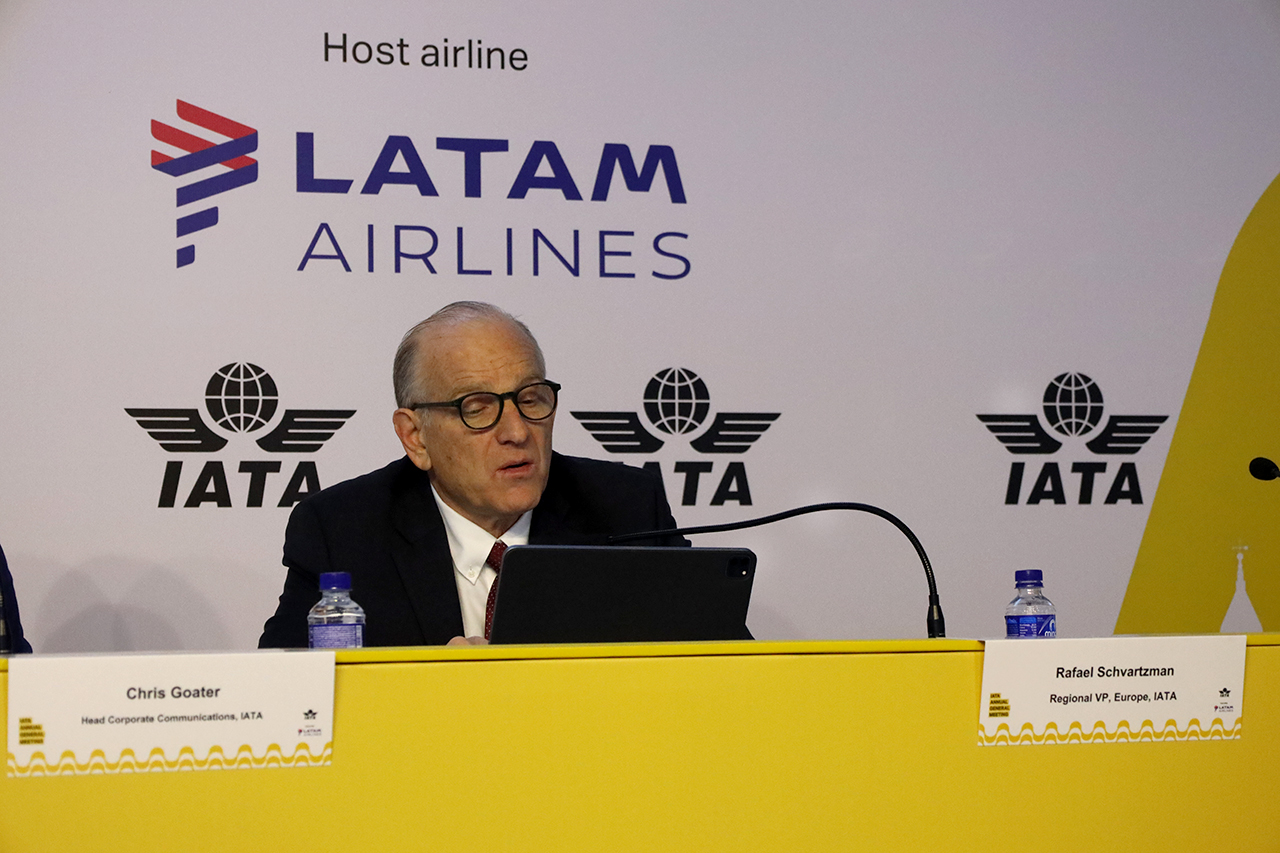
At IATA's 82nd Annual General Meeting in Rio de Janeiro, Rafael Schwartzman, the organization's Regional Vice President for Europe, described Central Asia as a region "growing exponentially," with Kazakhstan and Uzbekistan leading a surge in both passenger traffic and air cargo volumes. Crucially, he argued, the current geopolitical environment — far from being a headwind for the region — is actively accelerating its rise.
Geopolitics as Tailwind
The ongoing conflict involving Iran has forced major rerouting of east-west air traffic. Airspace restrictions across the Middle East and the former overfly routes through Russian territory — already curtailed after 2022 — have compressed the viable corridors connecting Europe and Asia. The result is a structural shift in traffic flows that is generating new demand through Central Asia.
"We are seeing restricted airspace to be able to fly from east to west or west to east," Schwartzman said. "That is also driving traffic in that area — which means it's an opportunity."
For Kazakhstan and its neighbors, positioning atop one of the few remaining efficient transcontinental air corridors is a geopolitical windfall that airline planners are beginning to price in seriously.
Cargo: The Immediate Opportunity
Schwartzman was particularly emphatic about the cargo dimension. As longer detour routes increase flight times and fuel costs, the case for intermediate stops strengthens. Kazakhstan — geographically central, with improving airport infrastructure at Almaty and the fast-developing Astana International Airport — is well placed to capture transit cargo demand.
"There are opportunities in terms of cargo — because obviously these are longer routes, so you need to maybe have a stopover," Schwartzman noted. "There are many discussions in terms of how to tap into that opportunity."
Air freight growth in Central Asia has been among the highest globally in recent years, and the current airspace configuration gives the region's airports a structural cost advantage for eastbound and westbound cargo that did not exist in the same form before 2022.
Passenger Growth: A Market Coming Into Its Own
Beyond cargo, Schwartzman pointed to strong and broadening passenger demand across the region. Kazakhstan and Uzbekistan have seen sustained growth in originating and destination traffic — not just transit flows — driven by rising middle-class incomes, improving visa regimes, and growing connectivity to both European and Asian hubs.
"We see strong growth in Kazakhstan, we have seen strong growth in Uzbekistan," he said. "The market is there. The potential is still there."
Kazakhstan's flagship carrier Air Astana has expanded its network substantially, while new low-cost entrants have broadened domestic access. Uzbekistan's Uzbekistan Airways and the newer FlyArystan have added capacity on routes that were underserved a decade ago.
What Kazakhstan Must Do
Schwartzman did not spell out a detailed policy prescription for Kazakhstan at the AGM, but his broader framing makes the priorities clear. Countries that capture aviation opportunity in geopolitically disrupted markets are those that invest in infrastructure, streamline regulatory environments, liberalize bilateral air service agreements, and lower the cost of doing business for carriers.
For Kazakhstan to consolidate its position as a genuine regional aviation hub — rather than simply a beneficiary of temporary rerouting — it will need to sustain airport infrastructure investment, develop competitive aviation taxation and charging structures, and actively market its transit proposition to international airlines seeking new east-west connections.
The window is open. Whether Kazakhstan moves decisively enough to anchor that traffic for the long term remains to be seen.
The 82nd IATA AGM continues in Rio de Janeiro through 8 June.