Stay up to date with the latest news
Subscribe to our telegram channel

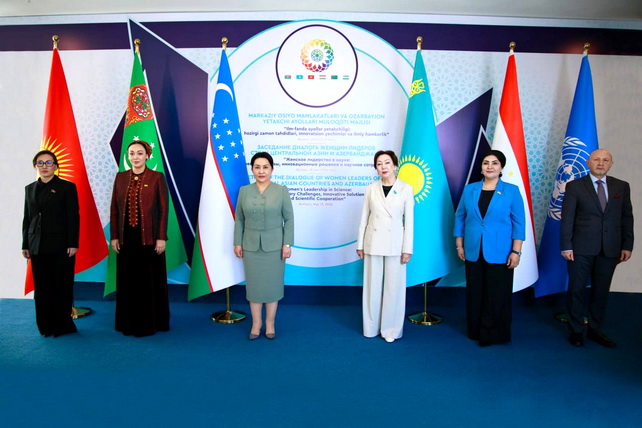
Central Asia Women Leaders Hold Forum in Bukhara
Tashkent, Uzbekistan (UzDaily.com) — A meeting of the Dialogue of Women Leaders of Central Asian countries and Azerbaijan was held in Bukhara, bringing together parliamentary leaders, representatives of international organizations, and members of the regional scientific and expert community.
The event was attended by heads of parliaments of Uzbekistan, Azerbaijan, and Turkmenistan; deputy heads of parliaments of Kazakhstan, Kyrgyzstan, and Tajikistan; as well as representatives of United Nations specialized agencies, including UN Women and the UN Regional Centre for Preventive Diplomacy for Central Asia.
It was noted during the meeting that the Dialogue of Women Leaders of Central Asian countries was established in December 2020 on the initiative of Uzbekistan as an informal regional platform aimed at supporting women, expanding their political, economic, and social opportunities, and strengthening interstate cooperation.
Participants emphasized that over a short period the Dialogue has established itself as an effective platform for promoting gender equality, strengthening women’s solidarity, and developing sustainable cooperation in the region. Since its creation, several meetings and consultations have been held on expanding women’s rights and strengthening regional partnership in this field.
This year, Uzbekistan once again held the chairmanship of the Dialogue. It was also highlighted that the accession of the Republic of Azerbaijan to the cooperation format marked an important step in expanding regional collaboration and strengthening mutually beneficial partnerships.
The meeting was opened by Chairperson of the Senate of the Oliy Majlis of the Republic of Uzbekistan, Tanzila Narbayeva, who emphasized the importance of ongoing efforts in the region to increase women’s socio-political participation, support their potential, and expand their involvement in public administration.
She noted that women’s solidarity within the Dialogue is making an increasingly significant contribution to the development of Central Asian countries, facilitating greater participation of women in integration processes and interstate cooperation.
The main theme of this year’s meeting was women’s leadership in science, modern challenges, innovative solutions, and scientific cooperation. Participants included delegation members, women scientists, experts, and representatives of international organizations who exchanged views on the further development of the Dialogue and strengthening cooperation in science.
On the same day, a forum of women scientists was held on the theme “Women’s Leadership in Science: Modern Challenges, Innovative Solutions and Scientific Cooperation.” Participants emphasized that the forum served as an important platform for uniting the intellectual potential of Central Asian countries and Azerbaijan, exchanging experience, and developing joint initiatives.
Discussions covered key issues including scientific development, innovation technologies, artificial intelligence, environmental sustainability, healthcare, and training of scientific personnel. Special attention was given to increasing women’s participation in research and scientific activity and creating favorable conditions for their professional development.
Across two panel sessions, participants examined prospects for scientific and technological cooperation, development of innovation ecosystems, support for young researchers, and improvement of science funding mechanisms.
Particular focus was placed on green technologies, the application of artificial intelligence across sectors, and the formation of a sustainable innovation infrastructure.
Measures to popularize science among young people, develop mentoring systems for students and researchers, and remove institutional and social barriers for women in science were also discussed.
At the conclusion of the forum, a joint communiqué was adopted outlining the implementation of the proposed initiatives and recommendations.
In particular, the parties supported the creation of a regional network of women scientists, “SheScience Central Asia,” which will serve as a platform to strengthen scientific cooperation and promote joint research in the region.