Stay up to date with the latest news
Subscribe to our telegram channel

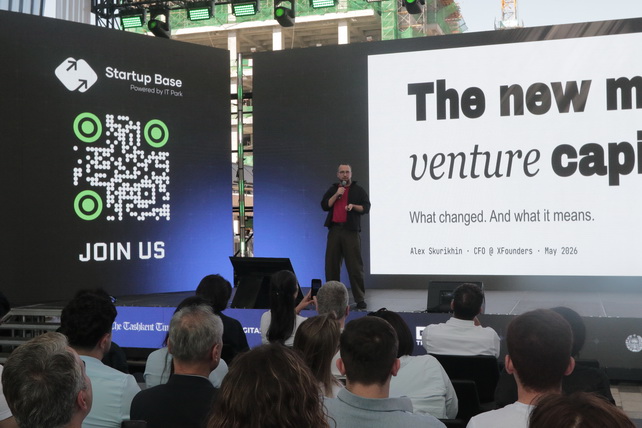
Venture Capital Is Changing: Alex Skurihin at TECH FEST in Tashkent
Tashkent, Uzbekistan (UzDaily.com) — Alex Skurihin, a representative of the XFounders Accelerator, which runs offline bootcamps for startup founders around the world, spoke at the Global Tech Weekend x TECH FEST forum in Tashkent, presenting an analysis of deep structural changes in the global venture capital industry. According to him, the transformation affects everything from the legal structure of deals to the fundamental business model of funds themselves.
The starting point for these changes, he said, was the widespread adoption of the SAFE instrument, a Simple Agreement for Future Equity developed by Y Combinator.
Whereas closing an investment deal previously took about a month—not due to a lack of investors but because of paperwork—the same process now takes about a week. Market trust in this instrument has grown so strong that it is being used even in regions where legal infrastructure is still underdeveloped.
At the same time, the mechanics of exits for founders and investors are changing. Skurihin noted that not long ago the only way to monetize a startup stake was to wait for an IPO, a process that could take a decade.
Today, the secondary market for shares allows early sales, with strong demand for stakes in companies such as OpenAI and Anthropic. He also noted that new restrictions on secondary market trading in these companies were reported just last week. Another accelerated exit mechanism he mentioned is SPACs, which allow companies to go public through mergers, bypassing traditional regulatory procedures.
The transformation has also affected the strategies of major industry players. According to Skurihin, Sequoia has consolidated all its funds into a single evergreen structure registered as a registered investment adviser, enabling investments across private equity, public markets, secondary shares, and real estate.
Andreessen Horowitz has taken a different path of vertical integration, building specialized teams with deep expertise in biotechnology, enterprise software, defense, gaming, and other sectors.
Alongside major firms, a new format is emerging: solo GPs—funds managed by a single partner. According to Skurihin, one person equipped with AI tools can now handle workloads that previously required entire teams.
These funds compete not on scale but on speed of decision-making. At the same time, the role of venture capital firms is evolving from simple capital providers into full platforms: startups funded by a16z, for example, receive not only investment but also go-to-market teams, marketing resources, and operational playbooks from day one.
XFounders, he said, has developed its own fourth model, describing it as a “venture operator” approach.
The firm generates returns through three channels: B2B contracts with large corporations seeking access to innovation; value creation within its portfolio companies; and selling its own services in the open market.
Concluding his speech, Skurihin addressed the regional context. He described Uzbekistan as one of the fastest-growing economies in the region and referred to two local unicorns—Zoom and TBC—saying their existence demonstrates the scale of the local market.
As an additional benchmark, he pointed to neighboring Kazakhstan, where specialists are already successfully selling technology products abroad, as evidence that Central Asian founders possess globally competitive skills and expertise.