Stay up to date with the latest news
Subscribe to our telegram channel

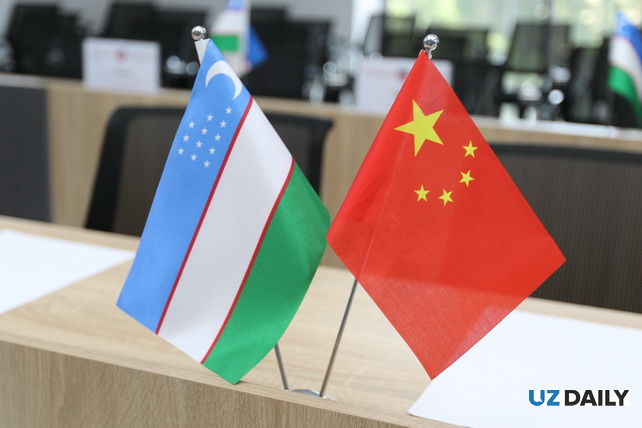
A Global Times interview highlights China–Uzbekistan cooperation on Aral Sea restoration, environmental recovery, and links to global development initiatives.
Tashkent, Uzbekistan (UzDaily.com) — On 19 May 2026, Global Times published an article in Beijing featuring an interview with Uzbek expert Professor Bakhitjan Khabibullaev of the Institute of Ecology and Geography at the Xinjiang branch of the Chinese Academy of Sciences and Director of the International Innovation Center for the Aral Sea Region of Uzbekistan, who was awarded the “Tianshan” Prize for 2025.
The publication examines joint efforts by China and Uzbekistan to restore the Aral Sea and their connection to China’s global development initiatives.
In the interview, it is noted that the ecological disaster of the Aral Sea resulted from unsustainable water resource management, including large-scale diversion of water from the Amudarya and Syrdarya rivers for irrigation during the Soviet period, primarily for cotton cultivation.
According to the expert, the water body has shrunk to roughly one-tenth of its original volume, leading to the formation of a salt desert on the dried seabed, dust storms containing toxic particles, soil degradation, loss of biodiversity, and the collapse of the fishing industry. The consequences also include deteriorating public health, rising unemployment, and migration.
The article also highlights the experience of China’s Xinjiang Uyghur Autonomous Region, which has developed practices to combat desertification and soil salinization under similar climatic conditions.
Among the approaches applied are water-saving agriculture, including drip irrigation, the use of salt-resistant crops, the creation of shelterbelts, restoration of desert vegetation, and integrated water and soil resource management. These technologies are being adapted to the conditions of the Aral region with consideration of local specifics.
The publication also mentions a joint Uzbek–Chinese project implementing a solar-powered intelligent irrigation system in cotton farming.
According to the data presented, the project has reduced water consumption, lowered soil salinity, increased crop yields, and reduced resource costs, while also generating additional energy through photovoltaic systems.
In the interview, Bakhitjan Khabibullaev emphasized that global development initiatives are seen as a tool for expanding international cooperation, technology transfer, and attracting financial resources for sustainable development. In his view, the Aral region could become a practical platform for implementing such approaches.
The expert concluded that a comprehensive combination of environmental, technological, and governance solutions can achieve significant results in addressing the consequences of ecological crises.
He added that further development of cooperation between China and Central Asian countries could strengthen scientific and educational ties, as well as expand joint projects in environmental technologies.